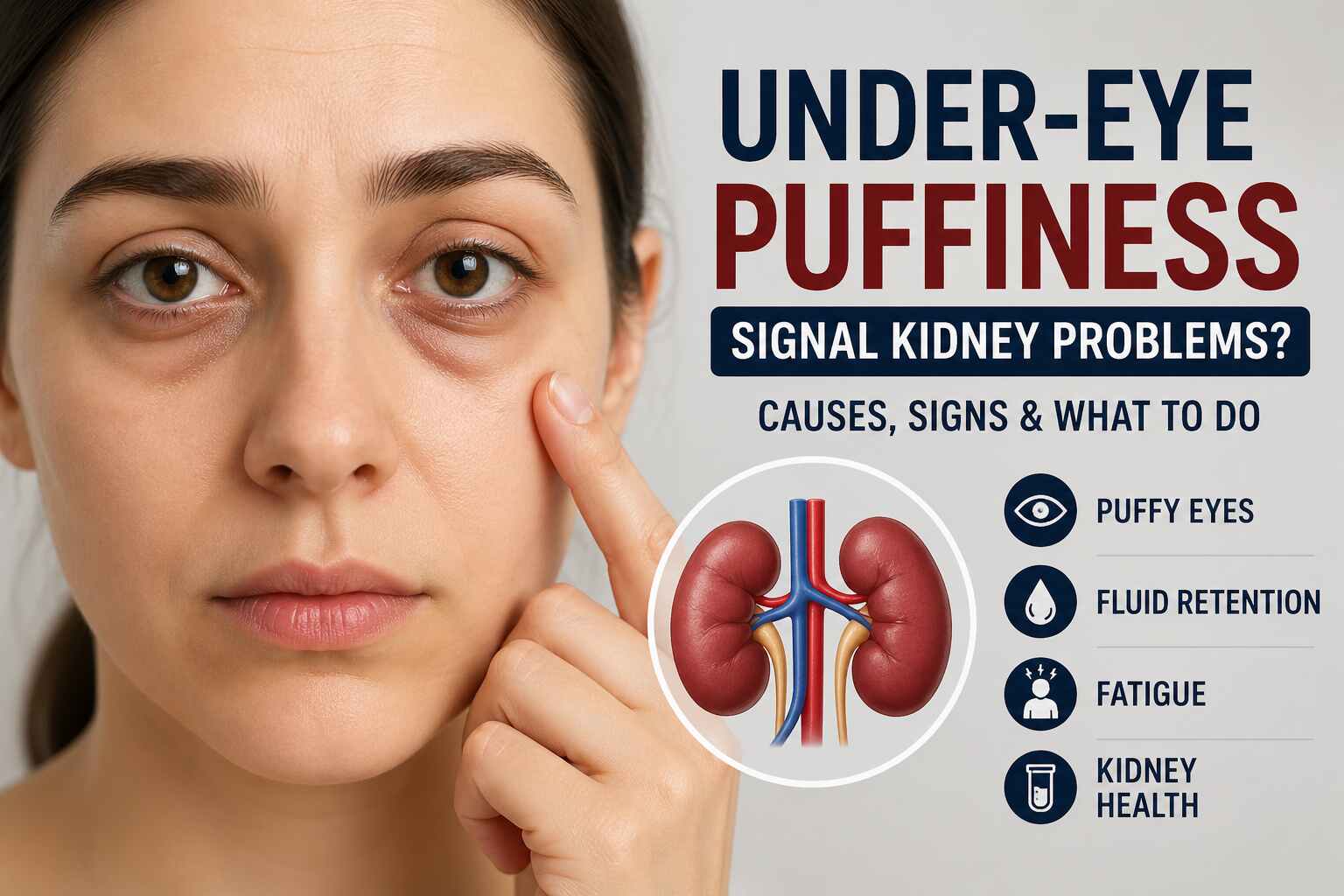
Under-Eye Puffiness Signal Kidney Problems
Does puffy eyes mean kidneys problems? Discover causes, symptoms and when to see a doctor about under-eye puffiness signal kidney problems.
Puffy eyes in the morning may feel innocuous, but what if there’s more to it? Though most people dismiss this common problem, in some cases, it may be a silent sign you need to listen to.
Overview:
Under-eye puffiness is something almost everyone experiences at some point. It may appear after a late night, excessive salt intake, or even stress. However, many people wonder: can under-eye puffiness signal kidney problems?
The short answer is yes but not always. While puffiness under the eyes is usually harmless, it can sometimes be linked to underlying health conditions, including kidney issues. In this detailed guide, we will break down everything you need to know in simple, easy-to-understand language.
What Is Under-Eye Puffiness?
Under-eye puffiness is inflammation or swelling under the eyes. The skin here is delicate and can be easily damaged, and is more likely to retain fluid.
Lack of Sleep
A lack of sleep is another common cause of puffy eyes. If you don’t sleep enough, fluid may build up around your eyes.
Aging
Your eye tissues begin to sag as you age. This lets fluid and fat accumulate, causing puffiness.
Allergies
Inflammation, redness and swelling around the eyes can be caused by allergic reactions.
Also read: Developer org
Key Functions of Kidneys
Fluid Balance
Kidneys help get rid of fluid. If they aren’t functioning well, water can accumulate.
Waste Removal
Kidneys remove waste products and toxins from your blood.
Blood Pressure Regulation
Kidneys regulate blood pressure via hormones.
Why Puffiness Happens in Kidney Issues
Fluid Retention
The fluid stays in the body and leads to puffiness.
Protein Loss
Kidney disease may result in protein leaking into urine. This causes blood protein to drop, and fluid build-up, such as under the eyes.
Reduced Filtration
Damaged kidneys hinder the body’s fluid and waste regulation, resulting in symptoms.
Early Warning Signs of Kidney Problems
Puffy eyes alone don’t indicate kidney disease, but can be a symptom of the condition if accompanied by other signs.
Swelling in Other Areas
Puffy eyes may be accompanied by swollen feet, ankles or hands.
Changes in Urination
Passing urine more frequently, dark urine or foamy urine may signal kidney problems.
Fatigue
A build-up of toxins in the body can result in fatigue.
High Blood Pressure
Renal disease can cause high blood pressure.
When Is Puffiness Normal vs Concerning?
Puffiness isn’t necessarily bad. Knowing the difference can help you know when to seek treatment.
Morning Swelling
It’s normal for your face to be slightly puffy in the morning but swellings pass as the day goes on.
Temporary Causes
It can be due to tiredness, crying or salty food.
Persistent Swelling
If swelling persists throughout the day or gets worse, it could be a problem.
Accompanied Symptoms
If you have other symptoms, such as tiredness or swelling, see a doctor.
How Doctors Diagnose Kidney Problems
If your doctor thinks you have a kidney problem, they may suggest some tests.
Blood Tests
These measure waste products such as creatinine and urea in your blood.
Urine Tests
They can check for defects in your urine or protein leakage.
Imaging Tests
You may have an ultrasound or CT to check the kidneys.
How to Reduce Under-Eye Puffiness
Even if your condition isn’t related to your kidneys, you can reduce puffiness for cosmetic and comfort reasons.
Stay Hydrated
Proper hydration keeps your body functioning.
Reduce Salt Intake
Reducing salt intake can help get rid of water.
Cold Compress
Using a cold cloth or spoons can relieve swelling.
Sleep Position
Elevating your head while sleeping can avoid pooling of fluids.
Final Thoughts
Generally under-eye puffiness is benign and associated with lifestyle habits such as sleep and diet. But sometimes, puffy under-eyes are caused by kidney disease and should not be overlooked particularly in the presence of other symptoms.
The key is awareness. Listen to your body, recognise symptoms and consult a doctor if you suspect something is wrong. Timely diagnosis of kidney disease can improve treatment and outcome.